Work
Class
ROVs
Class
ROVs
Silvercrest Submarines supplies work class ROVs rated from 500 metres to 5,000 metres depth, including hydraulic, electric, and hybrid platforms for offshore intervention, construction support, and pipeline operations.
MultiRov New Build 3,000m Work Class ROV
Perry Tritech Super Scorpio Work Class ROV
Oceaneering Hydra Magnum 100P – Work Class ROV
ISE HYSUB 5,000m Deep Work Class ROV System
SMD QXP25 Quantum Work Class ROV
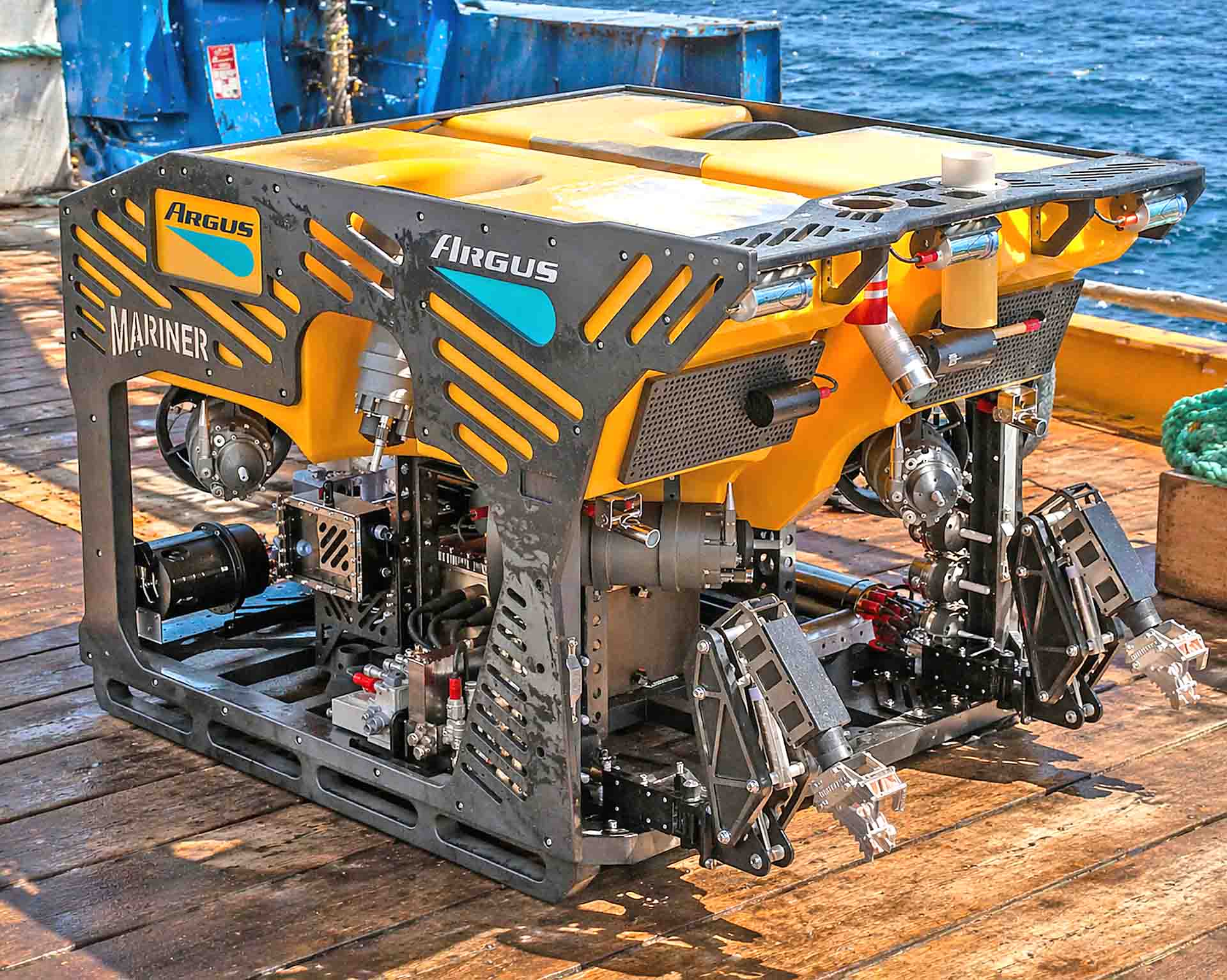
Argus Mariner XXL-50 Work Class ROV
Perry Triton XL & WL – 100HP Work Class ROVs
Saab SeaEye Jaguar Work Class ROV
SMD Quantum Work Class ROV 125HP
Schilling HD Work Class ROV
Get In Touch
Silvercrest Submarines maintains an inventory of work class remotely operated vehicles covering operational depths from 500 metres (1,640ft) to 5,000 metres (16,400ft), spanning hydraulic heavy-lift platforms, all-electric free-swimming vehicles, and hybrid systems suited to the full range of subsea construction, intervention, and maintenance operations. Platforms represented include Perry Tritech, SMD, Schilling, Saab SeaEye, Oceaneering, Argus, ISE, and new-build MultiRov configurations, available through outright sale, turnkey package, or charter arrangement. Where inspection and observation class systems provide observation capability, work class ROVs deliver physical intervention — the capacity to manipulate, recover, install, and repair subsea infrastructure at depth. Silvercrest Submarines’ over three decades of operational experience in subsea platform deployment informs every aspect of its work class ROV sourcing, assessment, and client consultation.
Operational Capacity and Applications
Work class ROVs are defined by their physical intervention capability: high-thrust vectored propulsion, heavy tooling payload, and manipulator arm configurations capable of valve actuation, connector make-up, debris removal, and precision tooling deployment. Systems available through Silvercrest Submarines include vehicles equipped with 4-function rotating claw manipulators and hydraulic 7-function units, with thruster arrangements providing the station-keeping stability required for subsea construction and intervention tasks in current-affected offshore environments.
Depth-rated platforms in this inventory range from the SMD Quantum QXP25 and 125HP Quantum, Perry Tritech Super Scorpio and Triton XL/WL series, and the Schilling HD, through to the Saab SeaEye Jaguar, Oceaneering Hydra Magnum 100P, and Argus Mariner XXL-50. For extreme-depth operations, the ISE HYSUB is rated to 5,000 metres (16,400ft), whilst the MultiRov new-build platform operates to 3,000 metres (9,840ft). Sonar integration across available platforms includes Mesotech, Imagenix, and Kongsberg systems, supporting navigation and infrastructure positioning in zero-visibility conditions.
Primary applications served by these platforms include offshore oil and gas IRM (Inspection, Repair and Maintenance) programmes, subsea pipeline and flowline intervention, umbilical and power cable installation, riser and manifold maintenance, deepwater construction support, salvage operations, and government or naval subsea tasks. Geographic operational contexts span the North Sea, Gulf of Mexico, West African deepwater fields, Asia-Pacific continental shelf, and global deep-water research sites.
Business Solutions and Market Position
Work class ROV procurement decisions typically balance capital investment against day-rate contract requirements and project duration. Silvercrest Submarines offers flexible commercial structures: outright acquisition for operators building or expanding permanent fleet capability, turnkey system packages that reduce mobilisation lead time by including TMS (Tether Management System), A-frame launch and recovery system (LARS), umbilical winch, surface control console, and spare parts inventory, and charter arrangements suited to contractors requiring time-limited capability without long-term fleet commitment.
Power supply requirements for systems in this inventory range from 380 to 480V three-phase, at 15 to 180 kVA depending on system size and configuration — a specification range that reflects the distinction between lighter all-electric free-swimmers at the lower end and hydraulic heavy-lift platforms with full tooling packages at the upper end. Qualified operators may enquire about specific power envelope specifications to confirm compatibility with available vessel infrastructure ahead of mobilisation planning.
The differentiator Silvercrest Submarines brings to work class ROV transactions is operational context. Pure equipment brokers can supply specifications; Silvercrest Submarines can assess condition against operational demand, advise on system suitability for specific project environments, and help buyers avoid the operational and contractual risks that arise from acquiring a platform without understanding its maintenance history or deployment limitations. This consultative approach is particularly relevant for operators entering new geographic markets or expanding into deeper operational envelopes.
Engineering and Safety Standards
Work class ROV operations in offshore energy and construction environments are subject to classification body requirements and industry guidelines that directly affect contractor qualification and client acceptance. Systems available through Silvercrest Submarines are assessed against DNV GL, Lloyd’s Register, ABS, and Bureau Veritas requirements as applicable, alongside IMCA ROVMED guidelines governing offshore ROV operations, maintenance, and personnel competency. Offshore energy operators and subsea engineering contractors should confirm applicable vendor qualification requirements with their procurement teams prior to enquiry.
Safety architecture across work class platforms in this inventory includes redundant thruster configurations to maintain station-keeping in the event of single-thruster failure, emergency recovery protocols, auto-depth and auto-heading flight automation, and integrated sonar for navigation and infrastructure positioning. These characteristics are not optional enhancements — they are operational prerequisites for offshore energy sector deployment, and their presence and condition are assessed by Silvercrest Submarines as part of every system evaluation.
Condition expectations for systems in this inventory are set by the demands of the operational environment, not by vendor optimism. Silvercrest Submarines assesses hydraulic system integrity, umbilical condition, manipulator function, electrical penetrator status, and thruster performance prior to listing. Investment considerations include the remaining service life of consumable and wear components, availability of OEM spare parts, and the platform’s maintenance documentation — all factors Silvercrest Submarines can advise on during the pre-purchase consultation process.
Global Manufacturing and Support
Silvercrest Submarines’ engineering background extends directly into work class ROV support capability. The company’s subsea motor manufacturing operations produce propulsion units rated from 24V to 6,600V at depths to 4,000 metres (13,120ft) — a manufacturing envelope that spans the full power range of work class ROV thruster systems. This in-house engineering knowledge underpins Silvercrest Submarines’ ROV refurbishment and repair capability, which covers thruster overhaul, hydraulic power unit rebuilding, umbilical inspection and termination, and control system assessment.
New-build options are available through the MultiRov platform (3,000 metres rated), providing operators with a route to current-specification systems where second-hand inventory does not meet project requirements. For operators acquiring existing platforms, Silvercrest Submarines can advise on refurbishment scope, source OEM and compatible replacement parts through established supply chains, and provide commissioning support to bring systems to operational readiness.
Operator training and system familiarisation support is available for buyers acquiring platforms new to their operational roster. Silvercrest Submarines draws on practical deployment experience to structure training programmes that address real-world operational scenarios, not solely manufacturer-specified procedures — a distinction that matters when systems are deployed in challenging offshore environments where crew competency directly affects operational uptime.
Why Silvercrest Submarines
Work class ROV transactions carry material financial and operational risk. A platform that is unsuitable for its intended deployment environment, poorly maintained, or missing critical support equipment can disrupt offshore programmes and generate significant unplanned expenditure. Silvercrest Submarines’ position in this market is built on operational experience that translates into honest, technically informed advice — not a broker’s incentive to move inventory.
Over three decades of subsea platform operations, including BBC natural history documentary productions requiring precision subsea camera deployment, extended Loch Ness research submarine operations, and the engineering knowledge accumulated through manufacturing subsea motors to 6,600V at 4,000 metres (13,120ft) depth, gives Silvercrest Submarines a practical understanding of what work class systems demand from both the equipment and the operators deploying it. This experience informs every system assessment, condition report, and commercial recommendation the company provides.
Serious buyers are invited to submit an enquiry through the Silvercrest Submarines contact form, specifying operational depth requirements, project environment, required manipulator configuration, and preferred commercial structure. Silvercrest Submarines will respond with relevant inventory options and, where appropriate, a structured technical consultation to ensure the right platform is matched to the right operation.