Micro
/
Eyeball
ROVs
/
Eyeball
ROVs
Silvercrest Submarines supplies Micro & Eyeball Class ROVs deployable by a single operator, including the AC-ROV SP-50 with its unique 190mm fly-through capability for confined pipeline, culvert, and infrastructure access to 75–100 metres depth.
Get In Touch
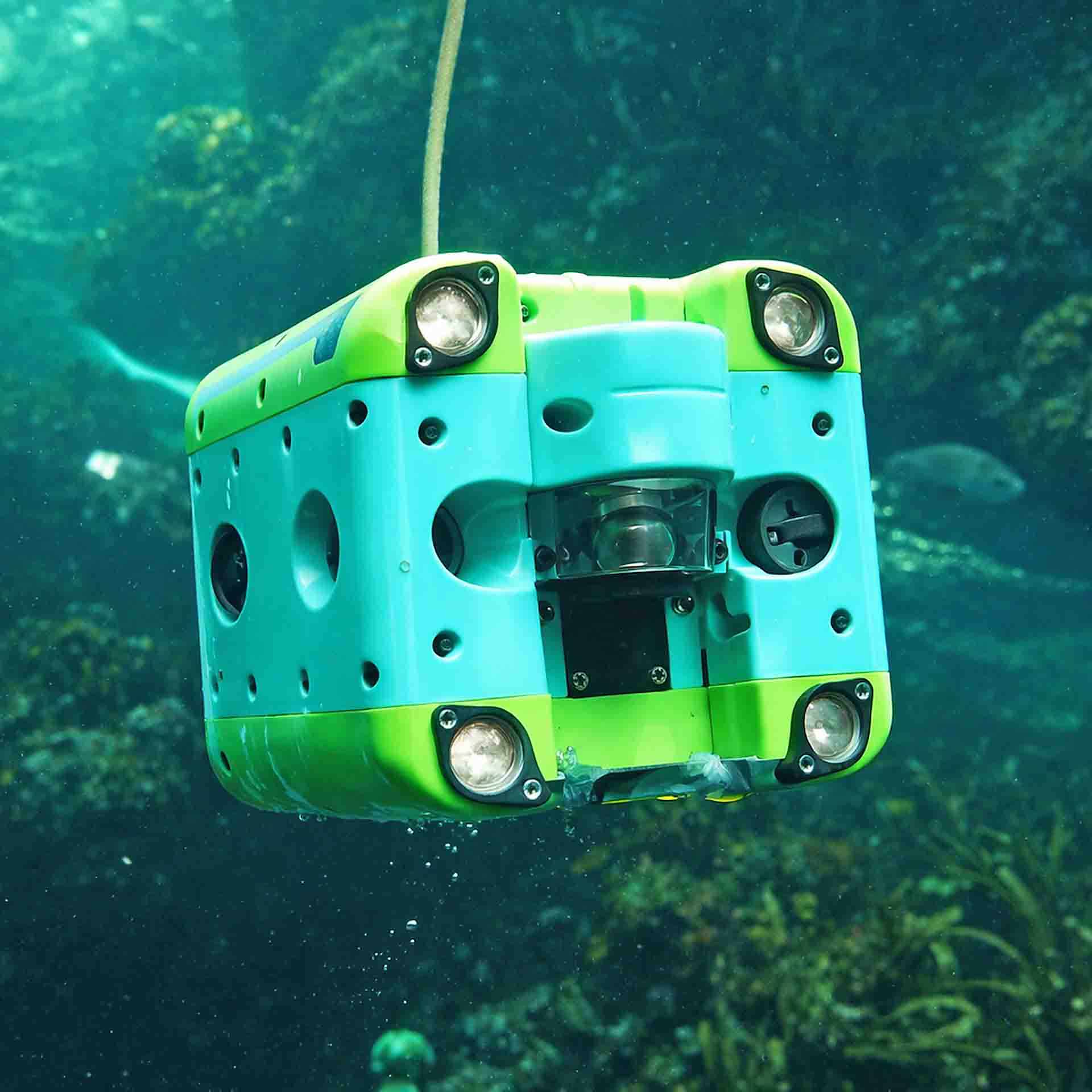
Micro and Eyeball Class ROVs occupy a distinctive position in subsea inspection: compact enough to carry in a single case, light enough for one person to deploy unaided, yet capable of accessing confined spaces that no larger platform can enter. Silvercrest Submarines’ inventory in this category includes the AC-ROV SP-50 — a six-thruster, 3kg inspection vehicle with a 190mm fly-through diameter that represents the narrowest access profile of any professional inspection ROV currently available — alongside the VideoRay Scout, a compact eyeball-class platform suited to shallow visual observation work. Both systems are available for sale, and together they address a wide spectrum of operators requiring rapid, low-overhead subsea inspection capability at depths to 75–100 metres (245–328ft).
Operational Capacity and Applications
The defining characteristic of micro and eyeball class ROVs is their operational independence from support infrastructure. The AC-ROV SP-50 has a total system carry-case weight of under 15kg, allowing a single operator to transport, deploy, and recover the vehicle from a vehicle, small workboat, jetty, or shore location without crane, A-frame, or deck winch. The 6-thruster configuration — four horizontally vectored and two vertical — provides stable hovering capability in confined and current-affected environments, whilst the Space Mouse controller allows precise three-axis positioning in tight spaces. Power input compatibility spans 90–260VAC and 124–370VDC, making the system equally deployable from shore mains supply, a vessel generator, or a battery pack.
The 190mm fly-through diameter of the AC-ROV SP-50 is the specification that defines this platform’s market position. No competing professional inspection ROV can pass through a smaller aperture. This capability translates directly into access to water intake structures, cooling water pipes, culverts, storm drains, drainage tunnels, irrigation channels, offshore jacket confined spaces, and flooded structural voids that would otherwise require dewatering, structural intervention, or remain entirely uninspected. The system’s 80-metre tether and real-time colour CCD video feed allow operators to survey the full extent of many common infrastructure runs in a single deployment.
The VideoRay Scout operates at depths to 40 metres (131ft) and is designed for rapid visual observation from two watertight rugged packing cases. With a fixed forward-looking camera, variable-intensity 20W halogen lights, and a three-propeller drive, the Scout is a cost-effective entry point for operators whose requirements centre on open-water visual inspection rather than confined-access work.
Business Solutions and Market Position
The micro ROV sector serves a broad buyer market spanning civil engineering, utilities, port and harbour management, aquaculture, marine insurance, film production, and resort operations. For water utilities and civil engineering contractors, the AC-ROV SP-50 transforms routine infrastructure inspection: no dewatering programme is required, no confined-space diver risk arises, and operational mobilisation from site arrival to first dive can be measured in minutes rather than days. For port authorities conducting routine hull and berth surveys, or marine insurers assessing vessel condition, the minimal support requirement of eyeball-class systems reduces the cost per inspection significantly compared with diver or larger ROV deployment.
Resort and marine park operators represent a growing buyer segment for micro ROV systems. A compact, camera-equipped ROV operated by a single crew member provides compelling real-time visitor experience content — live reef and lagoon footage, guided underwater tours, and marine life observation — without the operational overhead of manned submersible or diver-based programmes. Silvercrest Submarines’ background in resort underwater operations informs its advice to operators considering this application, ensuring that platform selection, tether management, and operational protocols are matched to the realities of daily visitor-facing deployments.
For operators whose inspection requirements extend beyond the 100-metre depth ceiling of this category, Silvercrest Submarines’ Inspection & Observation Class ROV inventory offers systems rated to 300–600 metres, with the option of sonar payloads, manipulator arms, and extended umbilical configurations. Silvercrest Submarines can advise on the most appropriate platform for the application, whether the requirement is for a single versatile vehicle or a multi-class programme covering both confined shallow inspection and deeper open-water survey.
Engineering and Safety Standards
Micro and eyeball class ROV operations do not typically require classification body certification — the systems operate in environments where mandatory offshore class requirements (DNV GL, Lloyd’s Register, ABS, Bureau Veritas) do not apply. However, operators working for public authorities, water utilities, or regulated infrastructure owners will need to satisfy site-specific HSE requirements and client inspection protocols. The AC-ROV SP-50’s carry-case deployment format simplifies RAMS documentation, as the system’s operational footprint is self-contained and does not involve lifting equipment, pressurised hydraulics, or high-voltage supply.
All systems in Silvercrest Submarines’ inventory are maintained to operational readiness. New-build systems, where available, are supplied with manufacturer warranties and commissioning support. Pre-owned systems are reviewed for condition prior to sale, and Silvercrest Submarines’ ROV repair and refurbishment capability ensures that systems can be returned to full specification where required. Buyers are advised to confirm the precise system configuration — tether length, monitor type, ancillary accessories — with Silvercrest Submarines prior to purchase, as individual inventory items may vary from standard manufacturer configurations.
Global Manufacturing and Support
Micro and eyeball class ROVs in the Silvercrest Submarines inventory are sourced from established manufacturers with international parts and service networks. The AC-ROV SP-50 is a proven platform with a broad installed base across utilities, infrastructure, and research markets. Replacement tethers, camera modules, thruster units, and control system components are available through standard supply channels, and Silvercrest Submarines can advise on parts sourcing and system maintenance schedules as part of the purchase.
Silvercrest Submarines’ own engineering infrastructure — developed over three decades of subsea platform operation and reinforced by an Australian subsea motor manufacturing facility producing motors rated from 24V to 6,600V at depths to 4,000 metres (13,123ft) — provides in-house technical capability that goes well beyond equipment resale. Buyers requiring operator training, system commissioning support, or operational procedure development can engage Silvercrest Submarines directly. The company’s experience across manned submarines, work class ROVs, and precision micro inspection platforms means that technical guidance on micro ROV deployment is grounded in operational reality rather than manufacturer literature.
Why Silvercrest Submarines
Silvercrest Submarines is not a catalogue retailer of subsea equipment. Over three decades of operational involvement — including extended submarine research expeditions, BBC natural history documentary productions, the W-Sub3 Tenerife tourist submarine programme carrying over 44,000 passengers annually, and a sustained record of ROV deployment across research, inspection, and filming applications — means that the team at Silvercrest Submarines understands how subsea platforms perform under working conditions. That operational background directly informs the advice given to buyers of micro and eyeball class ROVs: which platform suits a given confined-access application, how tether management affects manoeuvring in pipeline interiors, what to expect from single-operator deployment in tidal environments, and how to build a sustainable inspection programme around a compact ROV fleet.
Serious buyers considering the AC-ROV SP-50, the VideoRay Scout, or any micro ROV platform in the Silvercrest Submarines inventory are invited to submit an enquiry through the contact form. Silvercrest Submarines will respond with detailed system information, condition notes, and operational guidance matched to the buyer’s specific application.